
Lisa Gonzalez
August 28, 2026
The best career pages answer three questions before a candidate has to ask: what the job pays, what the hiring process looks like, and who they'd be working with. Help Scout publishes a salary band on every open role. $187K–$214K for a Staff Product Engineer, right there next to the job title. Most companies make you apply to find out.
That's the whole gap. Nearly every page below is well-designed. The ones worth copying are the ones that are specific.
Updated for 2026. Every page in this list was checked this month. Eleven examples from the previous version were dropped because the pages had been stripped back to a job-board widget or a values statement, and five new ones were added.
Building yours from scratch? Jobspage gives you a free careers page and a free applicant tracking system, so candidates land somewhere real instead of an email address.
The six things the strongest pages below have in common:
A career page is the page on your own website where you explain what it's like to work at your company and list your open roles. It's distinct from a job board listing: on Indeed or LinkedIn you're one result among hundreds, while on your career page you control the whole story and you don't pay per click.
It's also where your job descriptions live, and where JobPosting structured data gets read by Google. That markup puts your roles in Google's job search results, not just a job board's.
$236K–$284K for VP of Marketing. $131K–$175K for a mid/senior product engineer. Help Scout puts a real band on every open role, each tagged with equity, remote status, and location eligibility, and sets compensation "by a formula that's public to employees."
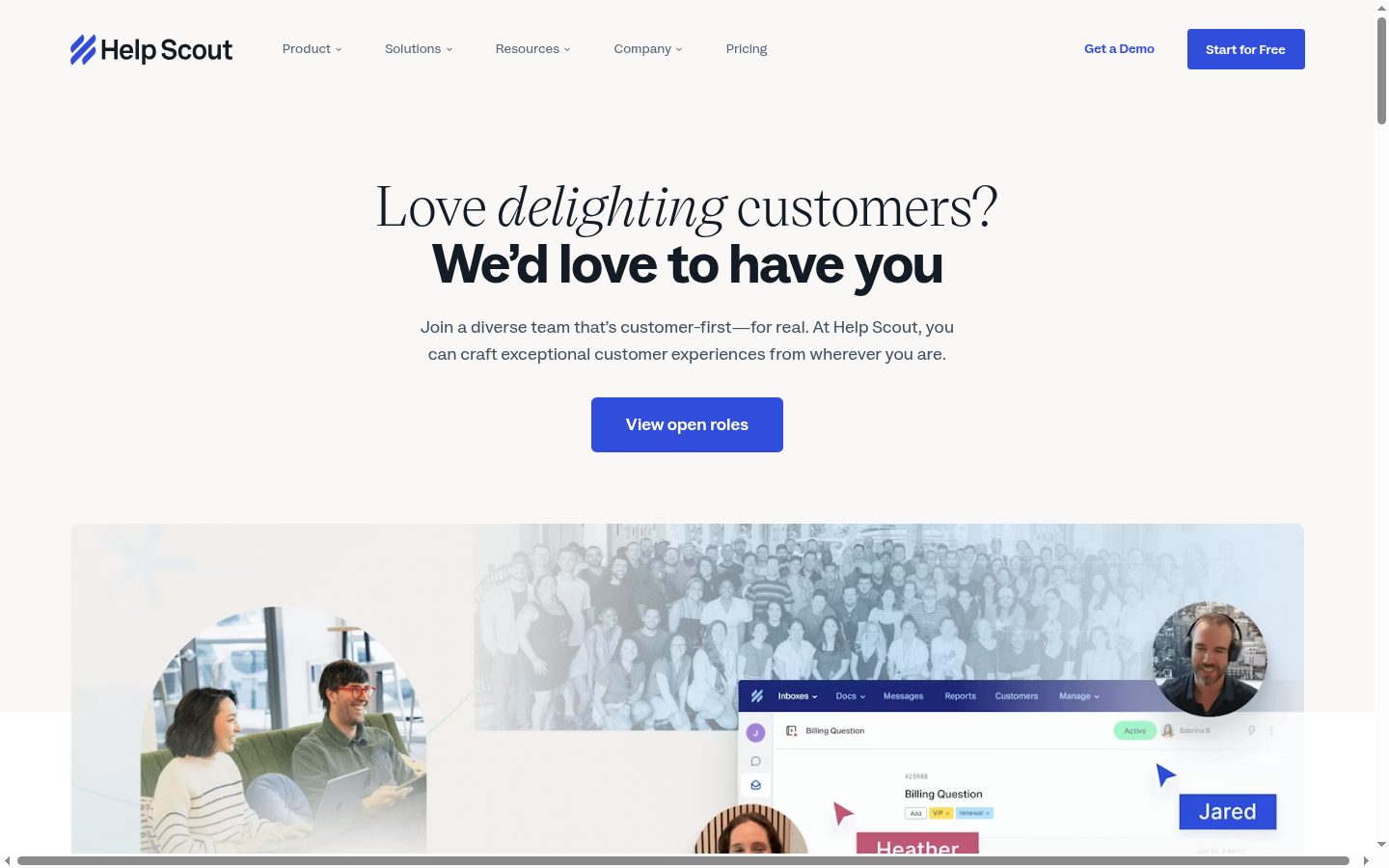
The hiring process has seven steps, and step four is a paid take-home project. People Ops covers salary expectations on the third call, before you've invested a week of evenings.
Steal this: put the band on the role, not in the offer email.
Buffer has published every salary at the company since 2013. Not bands. Actual names, titles, locations, and figures, from the CEO at $310,320 down through every engineer and marketer, updated as people join. The formula that produces those numbers is public too.
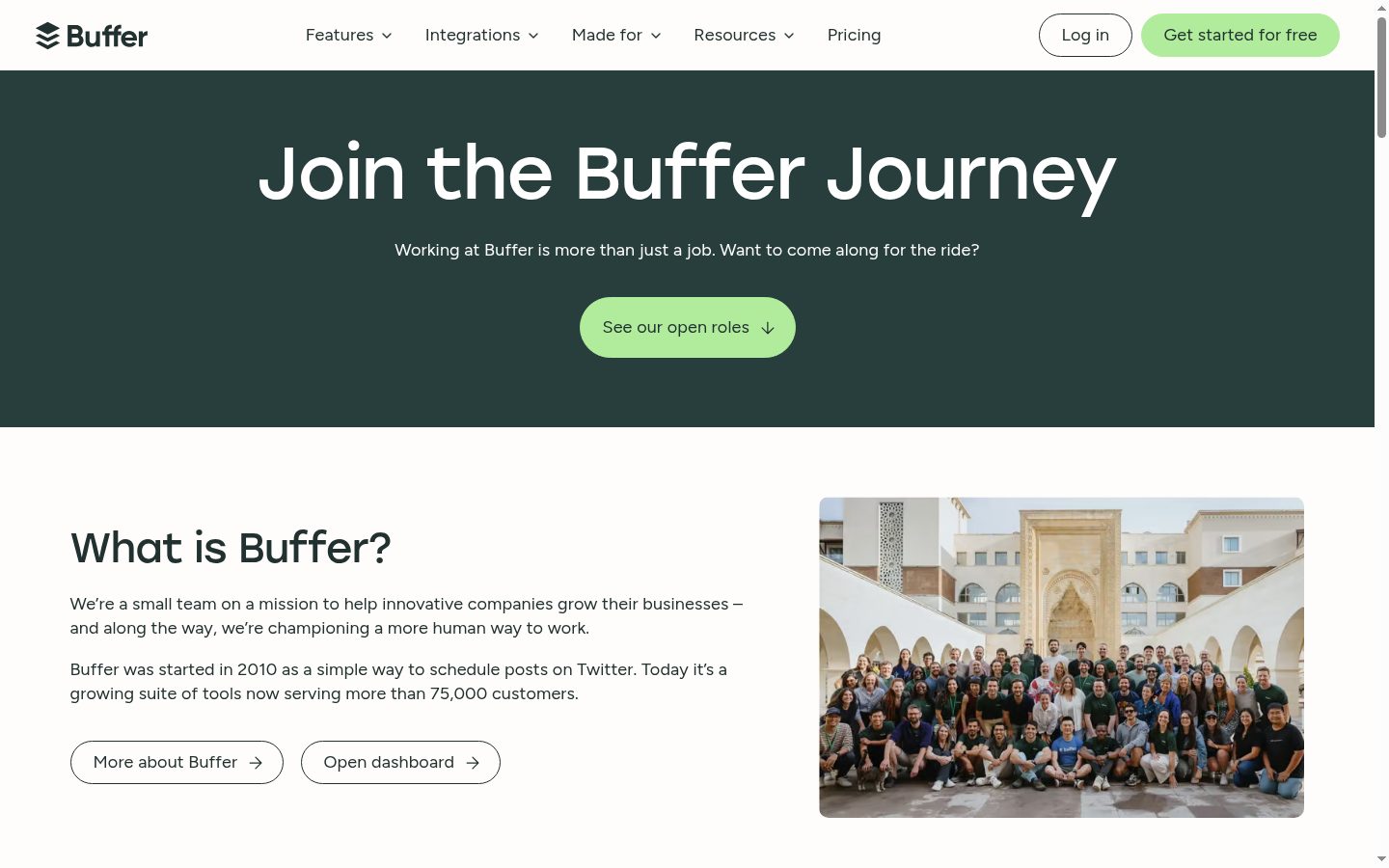
Almost no company will do this. But it makes the point that transparency is a spectrum, and most businesses are sitting at zero. Even a published formula, without the names, closes most of the trust gap.
The range arrives at the first interview, before either side has spent real time. Doist calculates it from a formula-based model benchmarked to industry data and adjusted for location. Their words: "no stressful negotiation required."
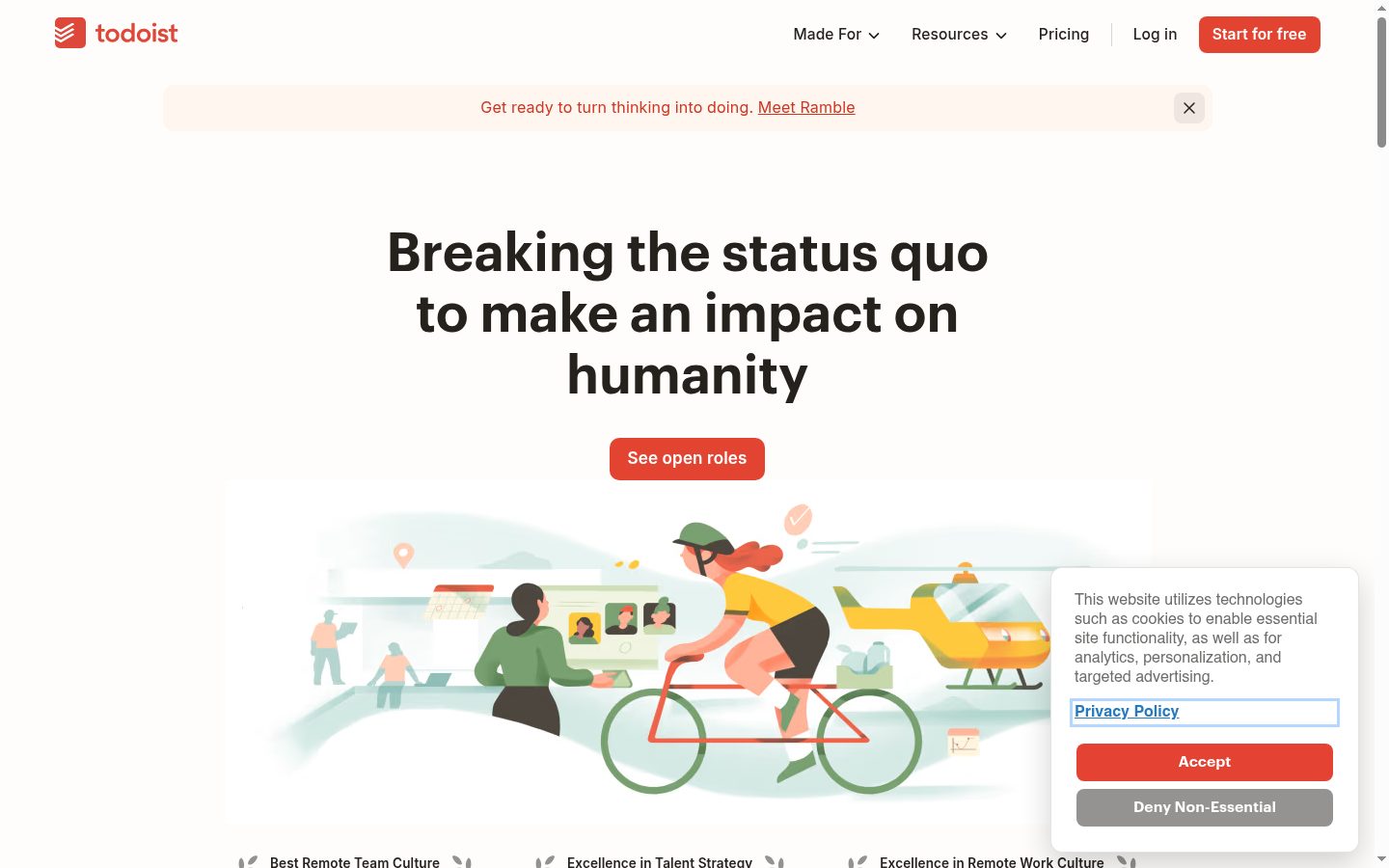
The rest of the process is spelled out end to end: application, interview with the salary reveal, task, reference and background checks, decision, then onboarding with an assigned mentor and a week of in-person co-working. Eight weeks PTO, stated plainly.
Steal this: naming when the money gets discussed removes the single biggest source of candidate anxiety.
Kit's careers page has a section headed "Kit is not for you if…". You want to coast. You want structure more than self-direction. You don't care about creators. You're opposed to AI. You need an in-person nine-to-five.
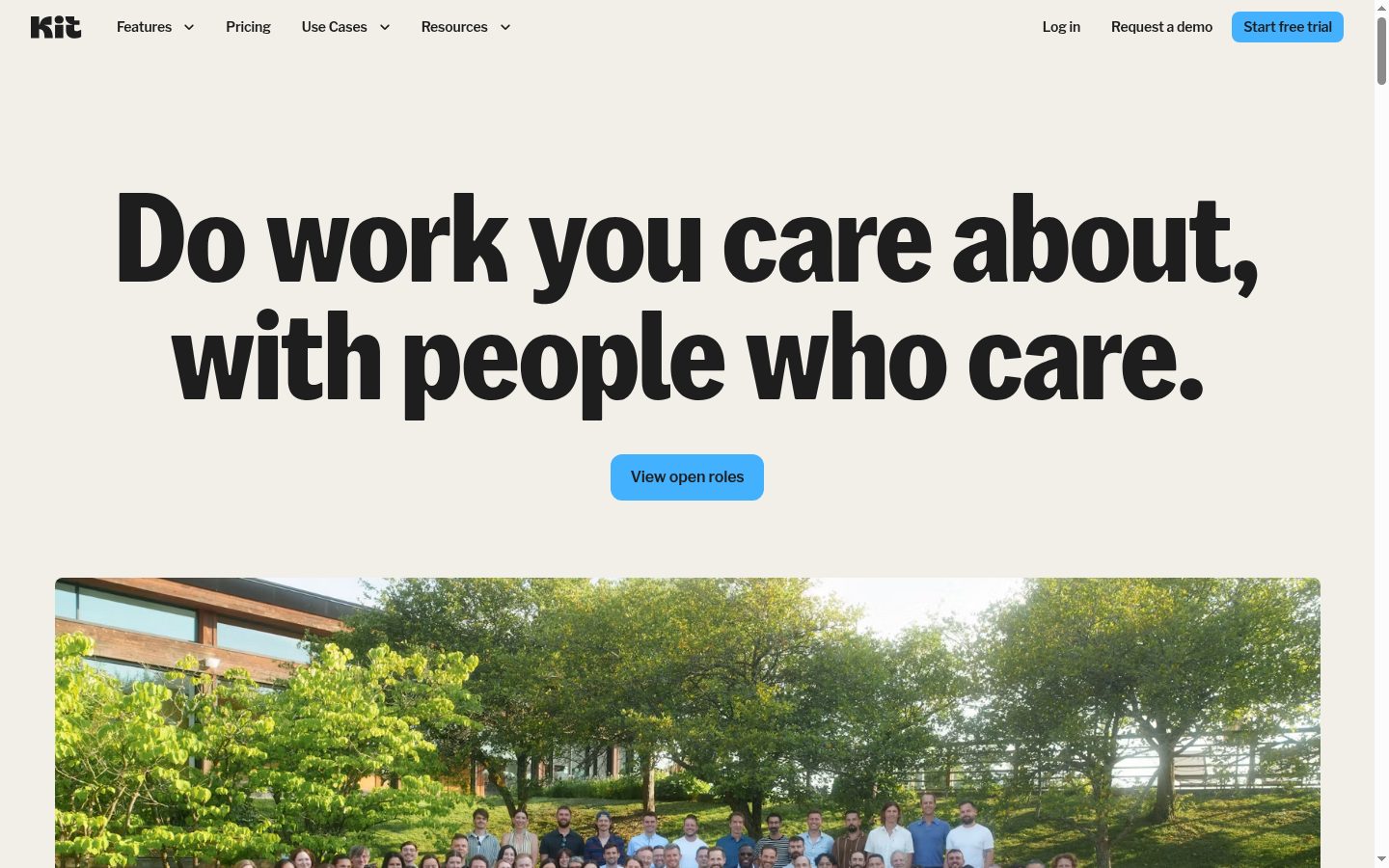
Most companies would never publish this. It's the most efficient filter on this list: the wrong candidates leave, and the right ones feel recognized. Kit backs it with tenure data (112 people, a third of them there four or more years), a five-year sabbatical, and a $1,000 bonus for taking five consecutive days off.
Steal this: an anti-persona section costs you nothing and saves you screening hours.
Before anyone gets an offer at Automattic, they do a paid trial project: a short piece of real work, on a real problem, compensated. It's a standard stage across 1,432 people in 83 countries.
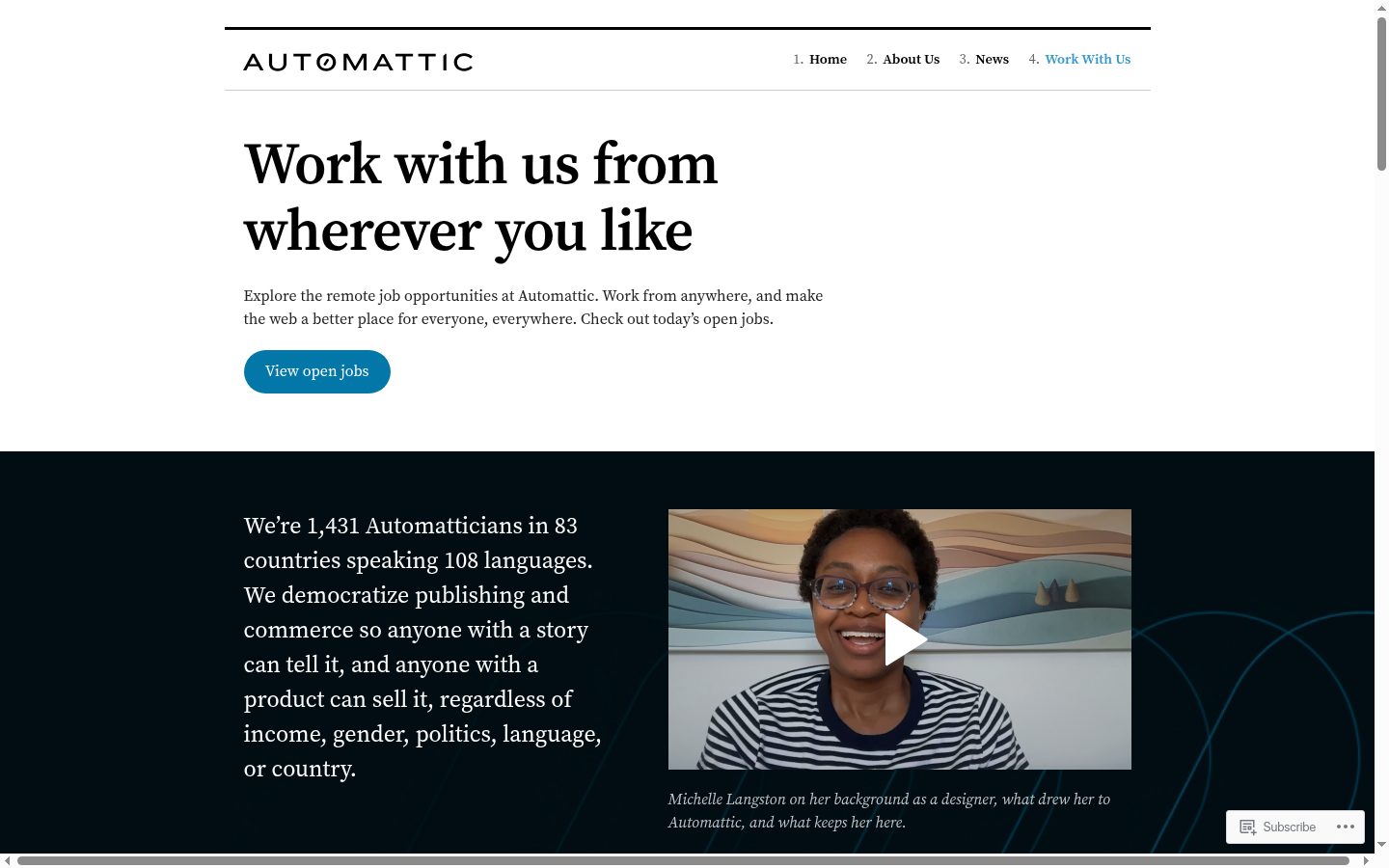
That replaces the hypothetical whiteboard question with evidence, and it treats a candidate's time as worth money. If you copy one process idea from this list, copy this one.
Harvest attaches a figure to almost everything: $1,000/yr education stipend, $400/month toward a co-working space, 6% 401k match after three months, a $1,750 referral bonus plus a $250 charitable donation, and after four years a $5,000/yr vacation fund that rises to $8,000 if you're bringing kids. They gave over $750,000 to charity in 2023.
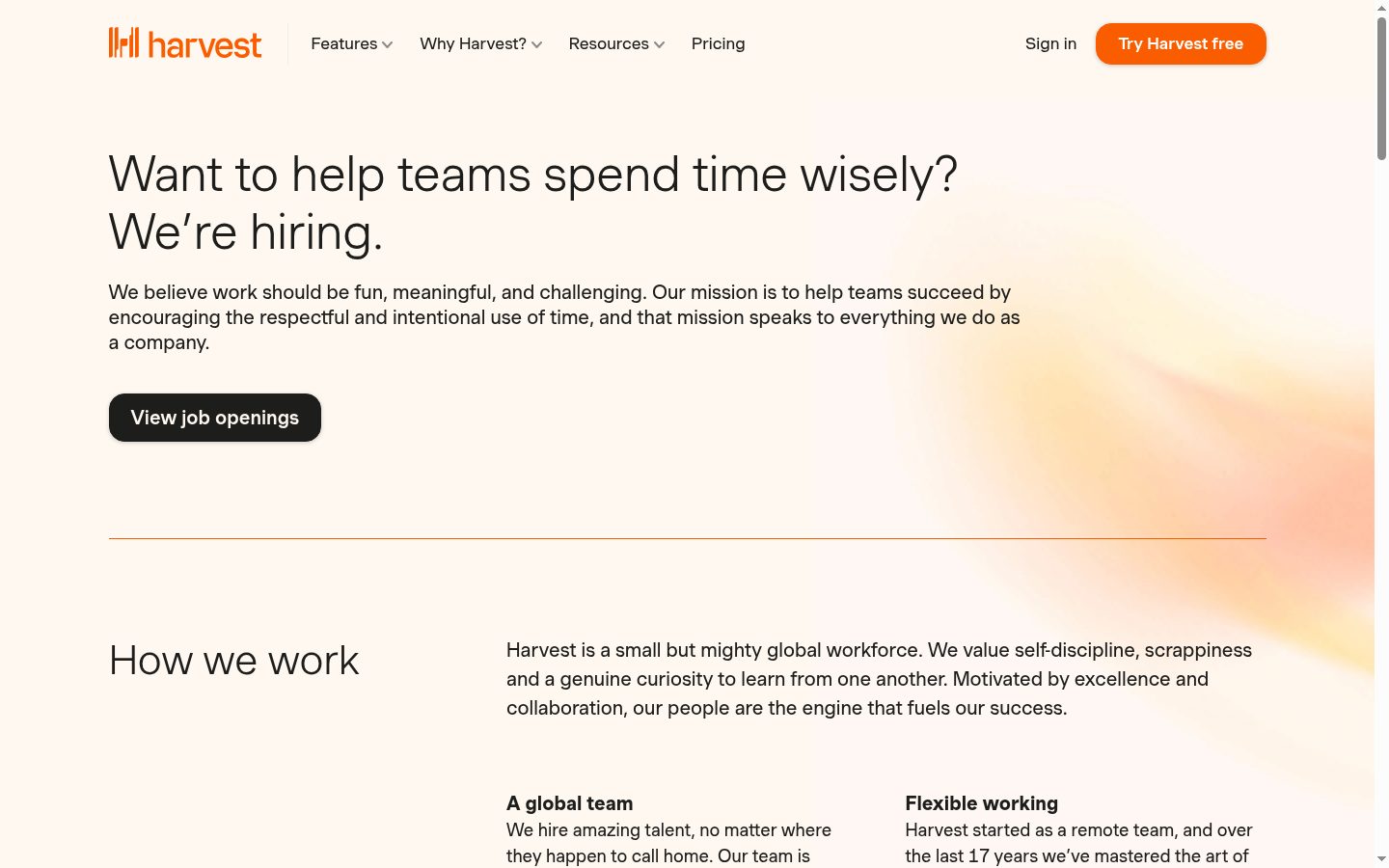
They also state they pay at the top of the New York City market regardless of where you live.
Steal this: replace every adjective in your benefits list with a number.
Ghost leads with structure, not perks: a non-profit foundation, no VC money, and a deliberate cap on team size at around 50 people. The page explains why the company is built that way before it asks anyone to join it.

Benefits follow. A $500 workspace budget, unlimited paid vacation with the office closed for two weeks each December, the last Friday of the month off.
If something about how you're structured is unusual, that's your lead, not your footnote.
There's no marketing page. 37signals publishes its entire employee handbook instead: benefits, compensation, how work gets done, the six-week cycles, down to payroll deduction amounts for health insurance tiers. It's a public wiki, maintained in a GitHub repo.
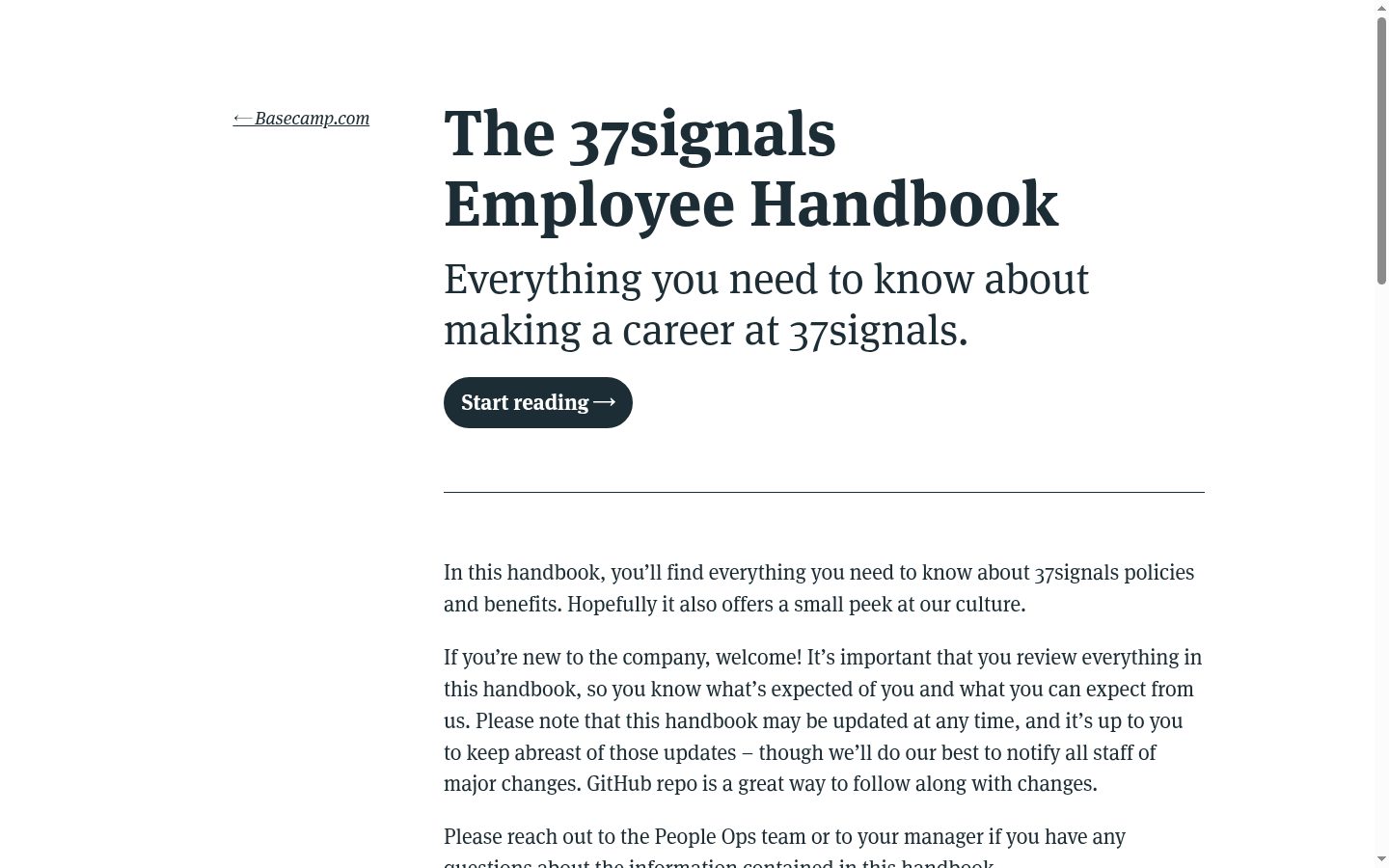
Steal this: you probably already have an internal handbook. Publishing it is a weekend of redaction, not a rebuild.
About 30 people in Portland, self-funded since 1997, and explicit that it hires only for in-person positions. Panic is a useful counterweight to the remote-first framing everywhere else on this list. The benefits list is short and concrete, including a Guideline 401(k) with an 8% non-elective contribution: they pay 8% whether you contribute or not.

There's also a paragraph encouraging people who don't meet every listed qualification to apply anyway. Being clear that the job is in an office is a feature for the people who want one.
Zapier publishes its written-application process and commits to a response cadence: applicants hear from them at least once a week while they're in the process. Ghosting is the single most common candidate complaint, and a stated interval is the cheapest possible fix.
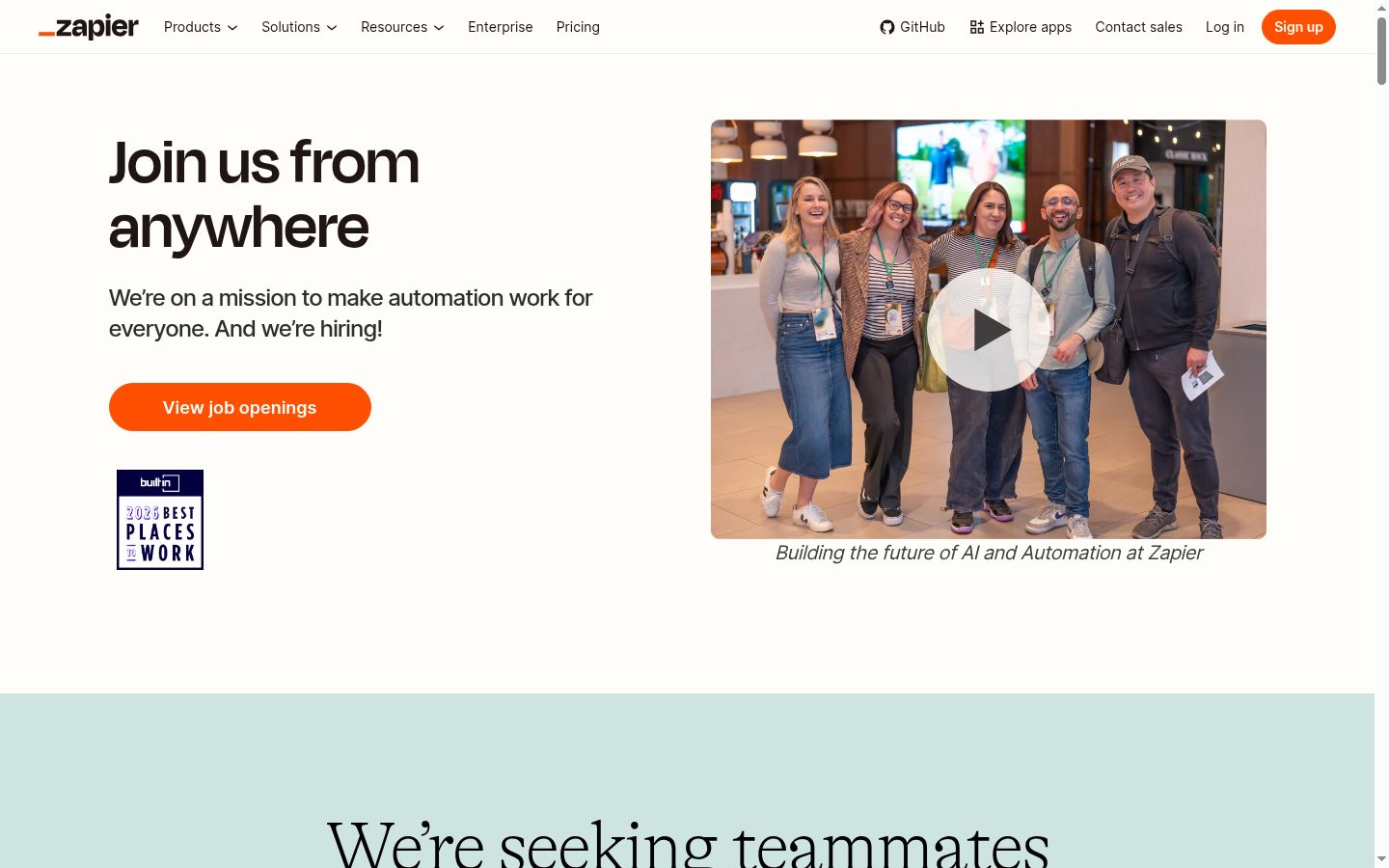
Fourteen weeks paid parental leave, stock options for everyone, and links out to deep-dive posts on how the remote team actually operates.
Steal this: promise a response interval, then keep it.
Perplexity commits to two numbers: you hear back within two weeks of applying, and get a decision within one week of the final interview. A separate interview guide is linked from the page. The hybrid policy (four days in office) and visa sponsorship are stated plainly rather than left to be discovered.

Publishing your timeline forces you to meet it.
VEED lists its process as Talent Partner call → hiring manager → practical work sample → meet the team → meet leadership. Three hiring hubs named (London, Amsterdam, Barcelona), a monthly no-receipts-required cash stipend, and a stated policy of paying above market rates.
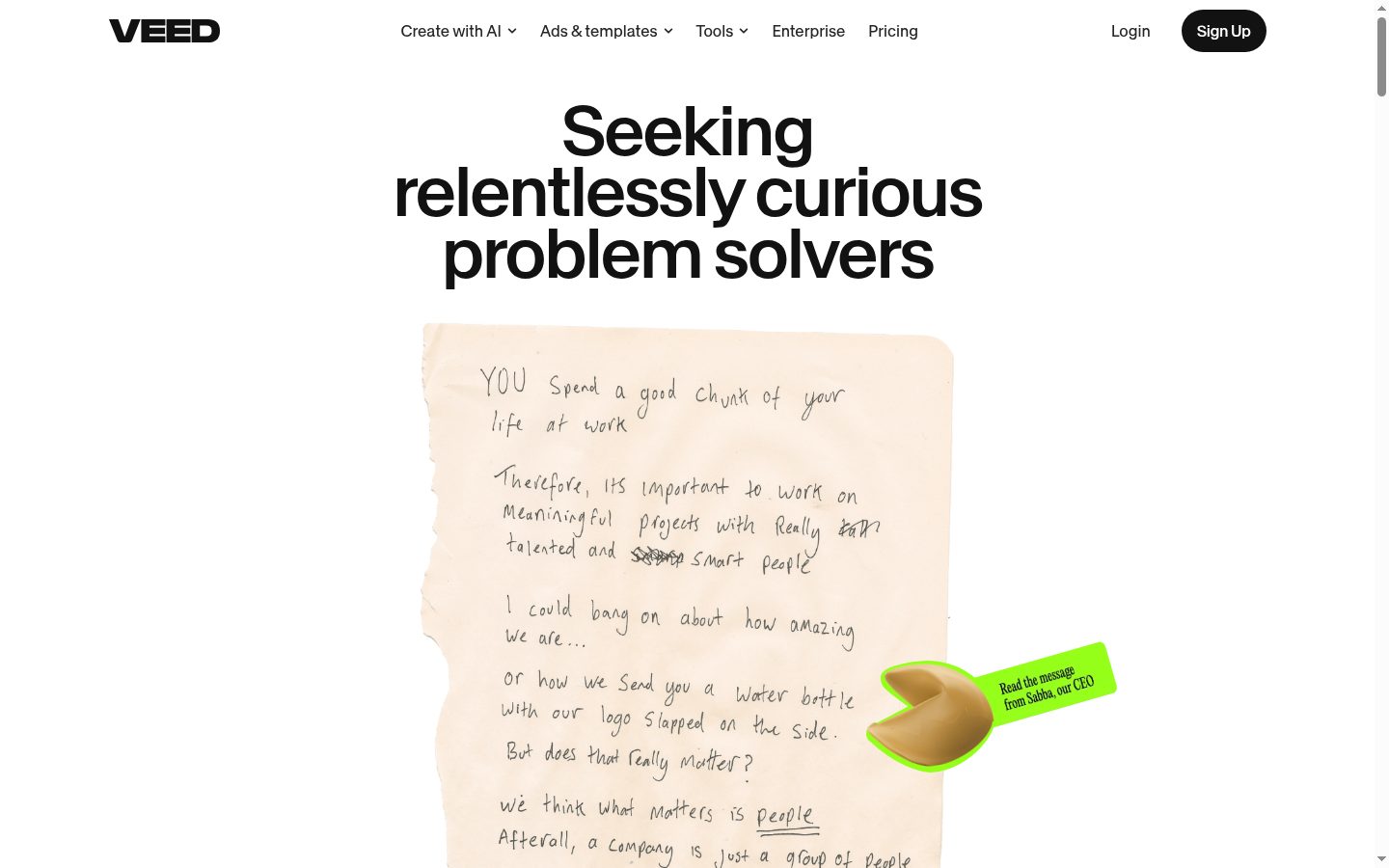
Steal this: five labelled steps is enough. Candidates mostly want to know how many calls.
Wistia is a video company whose careers page sounds like a video company: hackathons, biweekly show-and-tells, the office dog. Underneath the tone, the numbers are real. 16 weeks paid parental leave, 401k with a 3% company contribution whether or not you contribute, fully paid medical, dental, and vision premiums
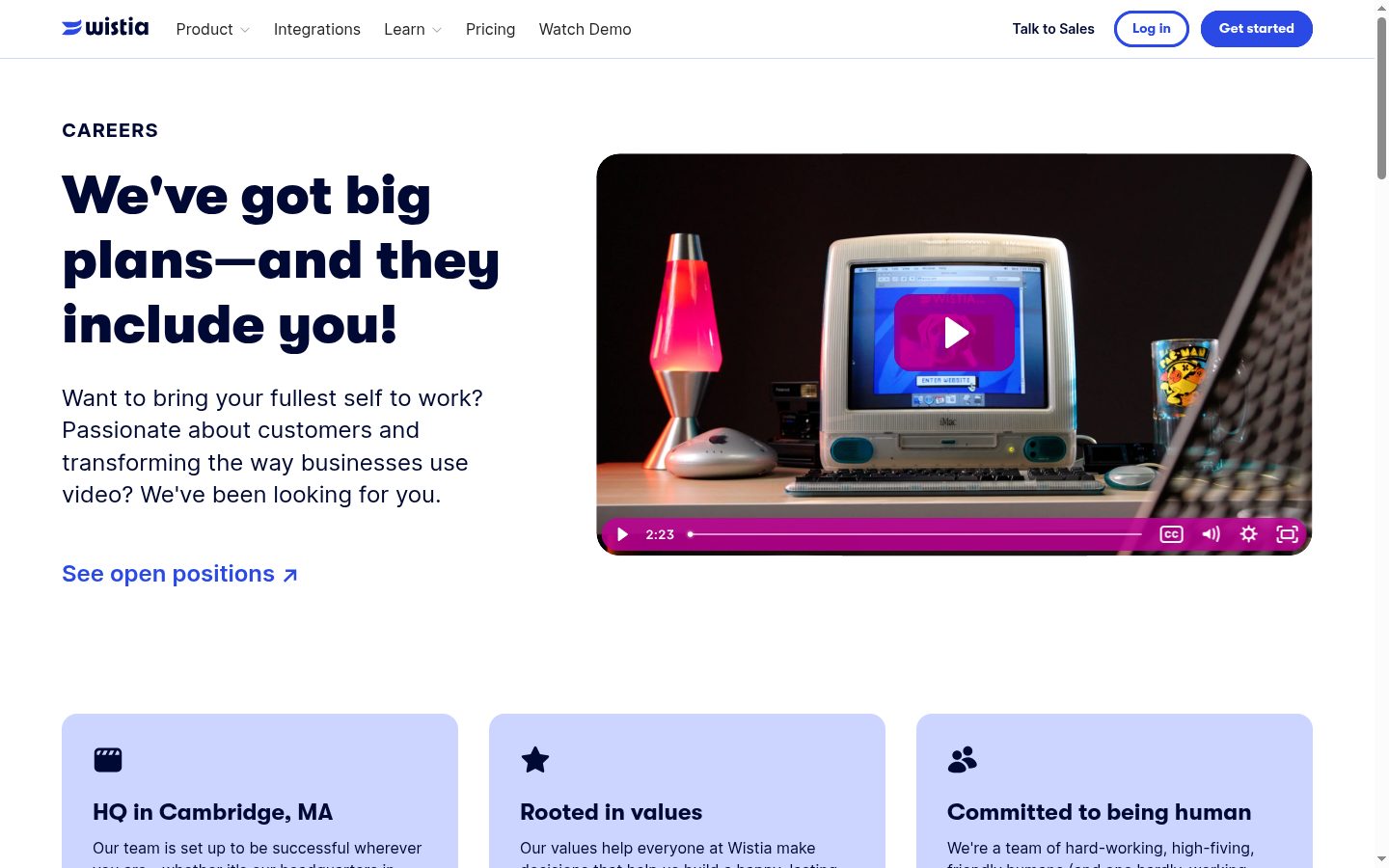
Personality and specifics aren't a trade-off. Most pages fail by having neither
Five named behaviours, each with a one-line definition: Own it, Prove it, Team it, Ship it, Feel it. Then Hubstaff hands the page over to first-person employee quotes about how remote work actually goes. Hobbies, dogs, a #wellness Slack channel.
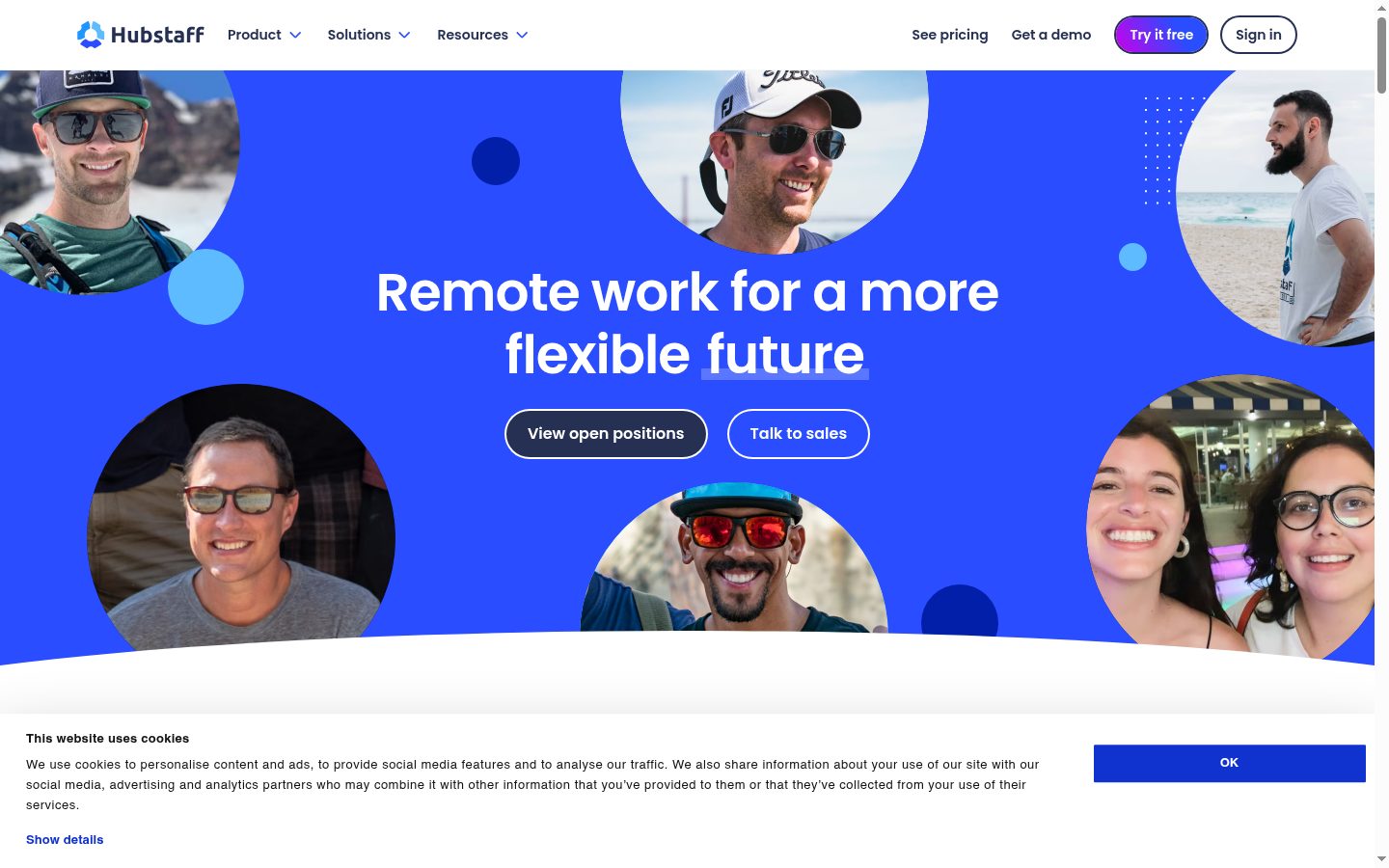
Steal this: one real quote from a current employee outperforms three paragraphs of culture copy.
Costco sells the job through people who stayed: a 17-year cashier, a parent describing a decade-long retail career. No perks grid, no founder letter. The argument is simply that people don't leave.
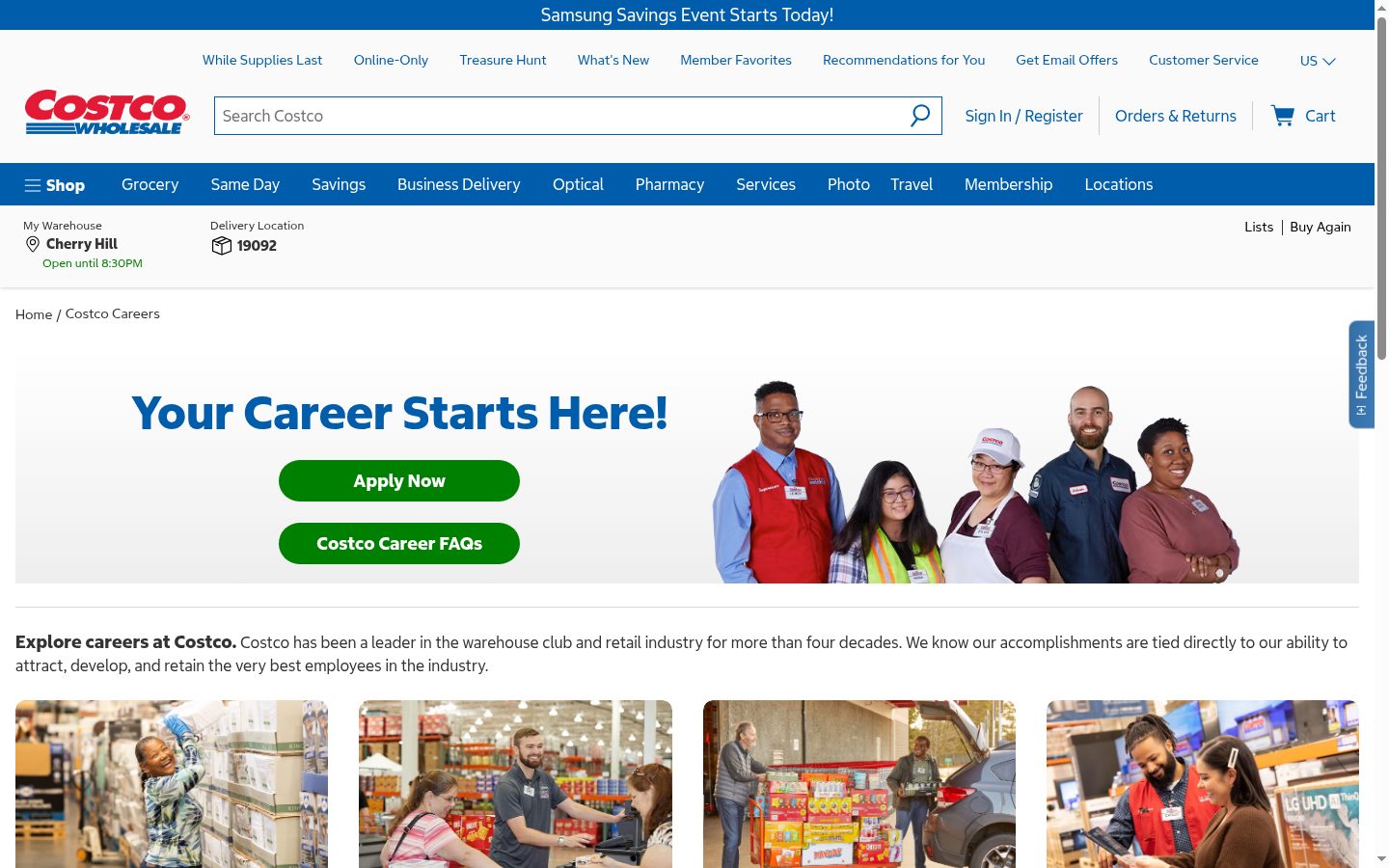
It's the only retail example here, and it's the right model for any business competing on stability rather than stock options. If your people stay, let them say why. That's the whole page.
OpenAI runs a six-month Residency for people coming from outside AI: a named, structured path for candidates who'd otherwise self-reject. Benefits are itemised properly. 24 weeks paid birth-parent leave, 20 weeks for non-birth parents, fertility and family-planning coverage, six coaching sessions, an annual learning stipend.
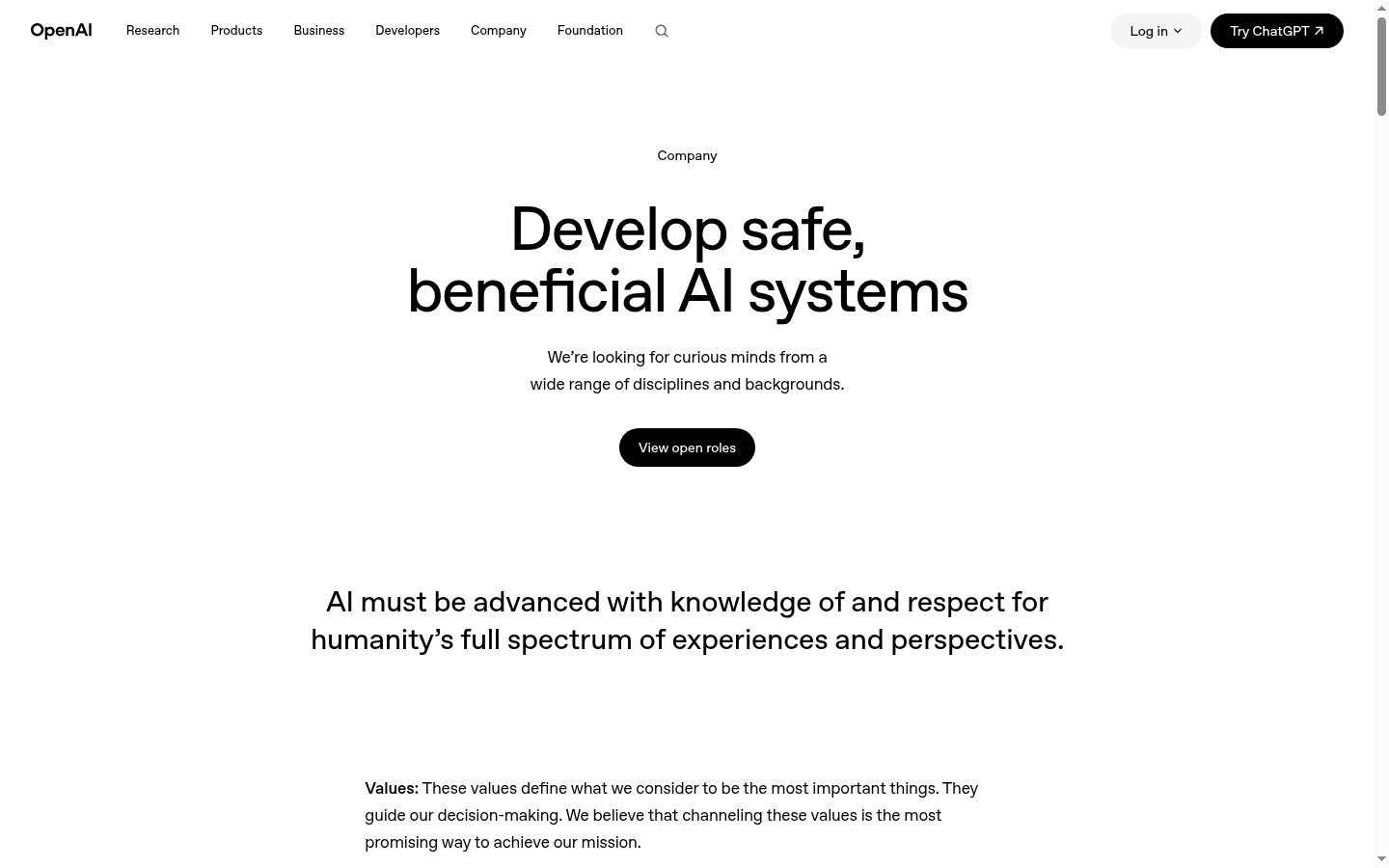
Steal this: a named programme for career-changers widens your pool more than any job-board spend.
Life at Canva is a separate microsite that acts as a hub, branching into culture, growth, teams, and locations, with city-specific employee quotes from Austin, London, and Manila rather than one global blur.

If you hire in several cities, give each one a voice. Candidates are choosing an office as much as a company.
Recharge opens with business numbers (100M+ subscribers, 20,000+ brands, $100M+ ARR), then four named values and a benefits list that includes 100% covered medical, dental, and vision premiums and 16 weeks paid parental leave.
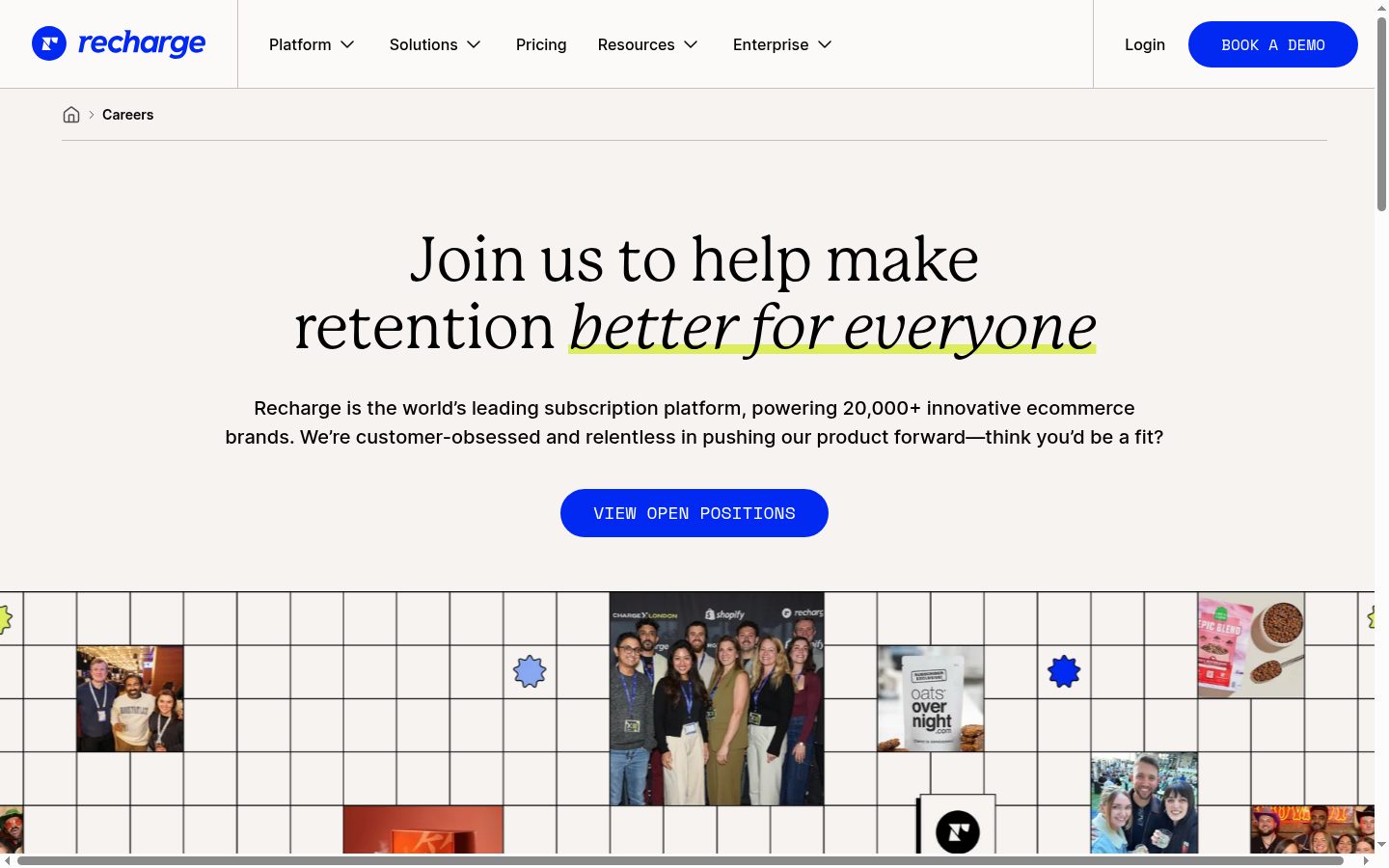
Steal this: growth figures answer the unspoken question about whether the company will still exist in two years.
If you're a small team, this is the most directly copyable page here. Awesome Motive links open roles straight to real listings, and the perks are modest and specific: 30 days paid parental leave plus 60 optional unpaid with the job held, a custom laptop at five years, yearly performance bonuses.
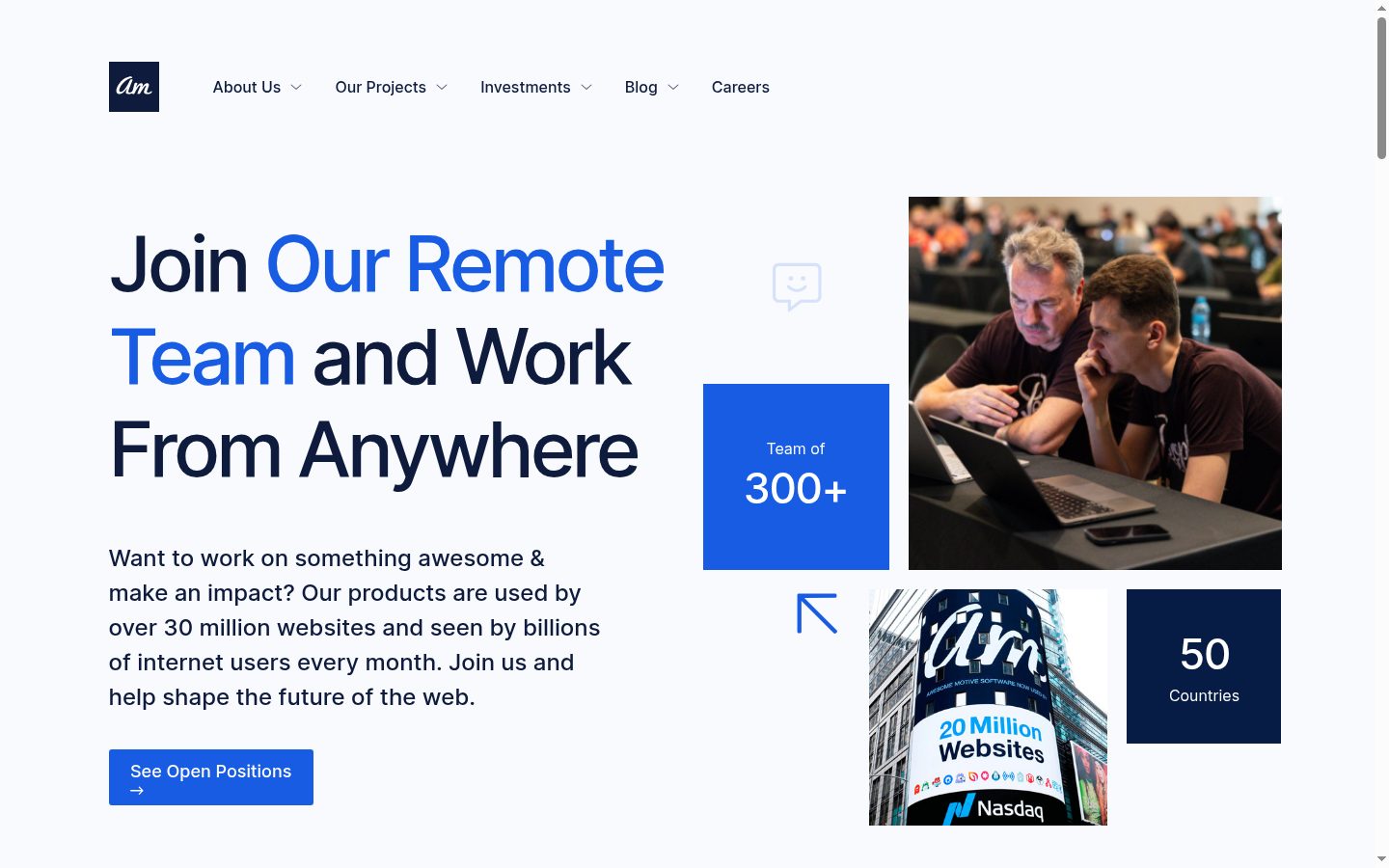
You don't need a microsite. You need real roles and honest specifics.
Bolt splits its page by workforce type: marketing, product and design, and separately, mechanics, fleet drivers, and warehouse staff. A warehouse candidate and a backend engineer need different pages, and Bolt is one of the few companies that admits it. Three-step process, named hub cities.
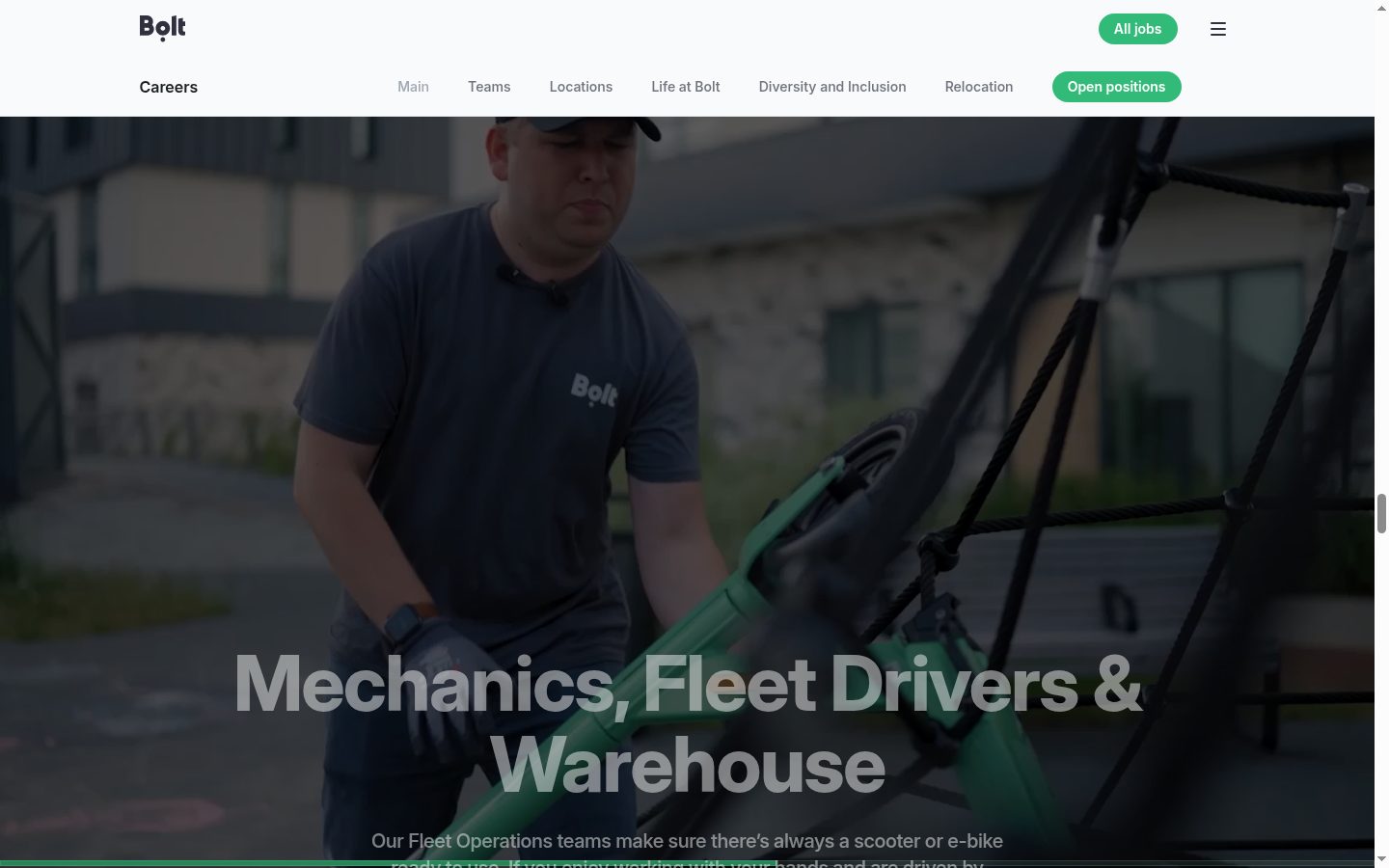
Steal this: if you hire for both office and field roles, one generic page fails half your candidates.
We cut eleven pages that used to be here. They're all still live, but they no longer do anything worth copying:
Worth noting for your own page: this is what happens by default. Career pages decay quietly, because nobody owns them after launch.
title, description, datePosted, hiringOrganization, and jobLocation for your roles to be eligible for job rich results. Get this right, and your page can compete with job boards.validThrough to a past date, return a 404/410, or remove the markup. Leaving dead postings live risks a manual action.A Jobspage careers page handles the structured data, the mobile layout, and the application flow, and it's free. That leaves you the part only you can do, which is saying something true about the job.
What should a career page include? Open roles with salary ranges, a step-by-step description of the hiring process, benefits with specific figures, at least one real employee voice, and a mobile-friendly application form. Anything beyond that is decoration.
What is the difference between a career page and a job posting? A job posting advertises one role and usually lives on a job board you pay for. A career page is on your own domain, covers every open role, and explains what working at the company is actually like. The posting gets the click; the career page decides whether they apply.
Do career pages need to show salary? In seventeen US states and DC, plus a growing list of cities, disclosure is legally required in the posting itself. Everywhere else it's optional and still worth doing, because most candidates say they're more likely to apply when the range is visible.
How do I get my jobs to show up in Google? Add JobPosting structured data to each role page with, at minimum, title, description, datePosted, hiringOrganization, and jobLocation. Then validate with Google's Rich Results Test and close out expired roles.
How much does a career page cost to build? Nothing, if you use a free careers page builder. A custom-designed careers microsite from an agency typically runs into the thousands, which is only worth it once your hiring volume justifies it.
What makes a bad career page? Stock photos, "competitive salary," no visible roles, a process nobody explains, and a form that breaks on a phone. Most bad career pages aren't ugly. They're vague.
How often should I update my career page? Review it whenever roles change and audit it fully twice a year. Eleven of the twenty-six pages in the previous version of this list decayed into something not worth showing within about three years.
Can a small business have a good career page? Close out expired roles. Awesome Motive and Panic are both on this list with roughly 30-person teams. Specificity is free, and it's the thing large companies are worst at.
Every page on this list that's worth copying does the same unglamorous thing: it replaces an adjective with a number. A salary band instead of "competitive." Sixteen weeks instead of "generous leave." Five named steps instead of "a conversation."
Design is the easy part, and it's the part that ecays first. Say what the job pays and how you'll decide, and you'll be ahead of most companies on this list, never mind your actual competitors.
